AUTOOL BT460 Review: Is This 12V/24V Battery Tester Worth It?
Battery or alternator how to tell uk: A Straight UK Answer
UK guide to “battery or alternator how to tell uk”: honest notes on the AUTOOL BT460 12V/24V battery & charging tester (£58.99), safety caveats, and when t
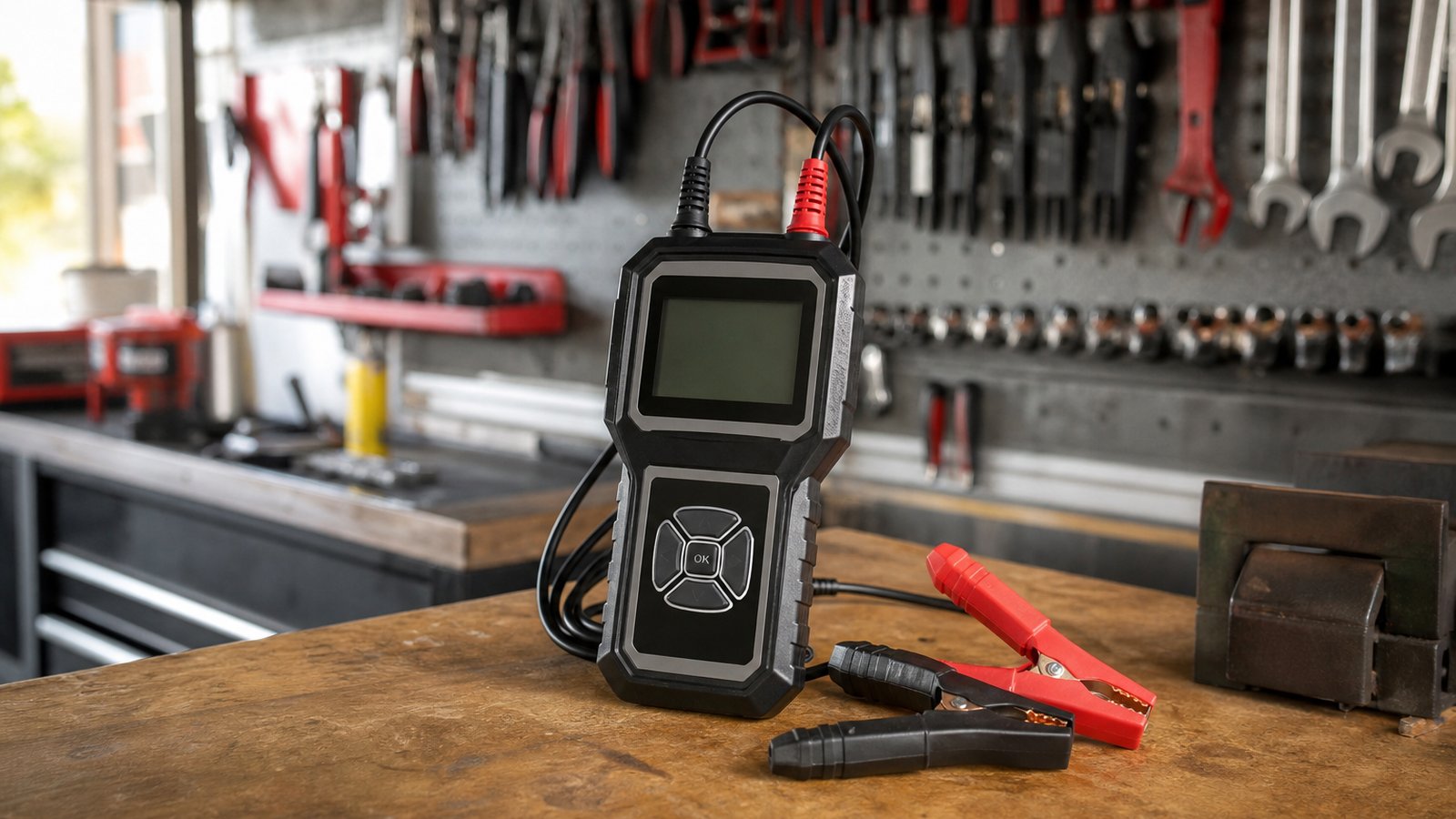
Searching “battery or alternator how to tell uk”? The AUTOOL BT460 on this UK site is a 12V/24V car battery and charging-system tester at £58.99, aimed at home triage, used-car checks, small garages and mixed fleets — not a substitute for a competent workshop when you are out of your depth.
You are probably staring at a frosty driveway and wondering whether this is a battery, an alternator, or a tow-truck morning. This article answers battery or alternator how to tell uk using live facts from autooluk.co.uk, plain UK English, and explicit safety caveats. Where we have not measured a claim, you will see a Product-specific figures and performance claims in this section should be verified against current manufacturer documentation and the delivered item; specifications, included accessories and revisions can change. placeholder instead of a made-up number.
What you are actually looking at
The product page sells the AUTOOL BT460 Car Battery Tester, 12V/24V at £58.99 including VAT (RRP £89.59). Live commerce copy emphasises free 1–3 day UK delivery, 30-day returns and 12-month warranty language, with next-day dispatch messaging on in-stock orders.
Model-family capabilities often associated with the BT460 (use as labelled claims, not our lab sheet): conductance-style battery health, cranking and charging-system checks, multi-standard menus (CCA/IEC/EN/DIN/JIS/GB and cousins), colour screen, Kelvin clamps and reverse-polarity protection, with a CCA window commonly cited around 30–2000 (retailer sheets sometimes differ — match your battery label). The on-page “technical specifications” block is otherwise thin — do not invent printer hardware or manufacturing audits here.
Product details live on the AUTOOL BT460 page. Shipping expectations are on the shipping policy.
Safety boundaries (read before you clip on)
A battery analyser is a measurement tool, not a licence to improvise around damaged wiring, leaking acid, or SRS/airbag circuits.
- Driveway DIY: keep metal tools clear of both posts at once; watch for acid and hydrogen risk around charging batteries.
- Reverse-polarity protection (model claim) reduces some clamp mistakes — it does not make careless probing safe.
- Do not keep cranking a barely-alive starter hoping “one more try” will fix chemistry.
- Used-car / fleet decisions: a reading is evidence for your decision, not a legal certificate.
- If unsure: use a competent garage. Breakdown organisations publish winter no-start advice for a reason.
For voltage-only myths see our live note on what voltage a car battery should be and the AUTOOL BT460 product page.
Triage order before you panic-buy a second tool
- Surface charge? After charging or running, resting voltage can look “healthy” while CCA capacity is not.
- Wrong standard/type? EN vs DIN vs CCA mix-ups create fantasy numbers.
- 12V vs 24V menu? A wrong system setting is a classic own-goal.
- Clamp contact / corrosion? High resistance at the post fools more DIY tests than bad chips do.
- Battery vs alternator vs drain? A conductance tool answers health/cranking/charging questions — it is not the same job as a DC clamp parasitic-drain hunt.
- Support: contact via the contact page with symptoms + photos if you suspect a faulty unit under warranty.
Product-specific figures and performance claims in this section should be verified against current manufacturer documentation and the delivered item; specifications, included accessories and revisions can change..
How this relates to “battery or alternator how to tell uk”
Searchers who type battery or alternator how to tell uk usually want a decision gate, not a brochure:
- Capability gate — Do you need conductance/CCA health and system tests, or will a multimeter voltage check do for now?
- Competence gate — Are you entering the right standards and staying safe around posts and wiring?
- Logistics gate — Does UK delivery, warranty and a 30-day returns window matter for your deadline, viewing or gift?
If all three are green, a £58.99 12V/24V analyser is a coherent buy. If any gate fails, walking away is success.
Money maths without fake urgency
At £58.99, one avoided breakdown call-out, one honest used-car negotiation, or one prevented missed van job can pay for the tool. That is not a promise — it is why capable DIYers and small garages buy once with returns cover. On-page lines such as “selling fast” or countdown dispatch timers are site UI, not an independent stock audit. Compare on equal columns and ignore theatrics. Related reads: /blog/car-wont-start-cold-morning-clicking-noise/ and /blog/how-to-test-car-battery-at-home-uk/.
Practical rules worth printing
- Match the label standard before you trust a number.
- Rest the battery when surface charge may be lying.
- Test health, then cranking, then charging — in that spirit.
- Stop for acid, smoke, or confusion.
- Photograph results if you need evidence for a seller, customer or family chat.
- Use returns if the tool is wrong for your job — do not “make it work” unsafely.
Product-specific figures and performance claims in this section should be verified against current manufacturer documentation and the delivered item; specifications, included accessories and revisions can change.. Until published, expect voltage-only DIY to miss capacity fade.
Who should choose something else
Skip this path if you only needed a plug-in trickle maintainer and already know the battery is healthy. Skip if you need a calibrated Midtronics printout for a corporate fleet contract. Skip if your real problem is a parasitic drain that wants a DC clamp method rather than a conductance health score. Trades doing high-volume warranty work may still prefer premium calibrated kit — budget 12V/24V analysers are workhorses, not magic certificates.
Frequently asked questions
Is the AUTOOL BT460 only for professional garages?
No. The site positions tools for professional and domestic use. Domestic users still need competence boundaries; stranded-risk jobs may still want a garage.
Does it test charging systems and cranking as well as battery health?
That is the usual reason people graduate from a multimeter. Model-family materials describe battery, cranking and charging paths — confirm the live menus on arrival and use Product-specific figures and performance claims in this section should be verified against current manufacturer documentation and the delivered item; specifications, included accessories and revisions can change. notes rather than invented screenshots.
Does this UK listing include a built-in printer?
Not clearly. Some persona notes and third-party sheets mention printing on AUTOOL lines; autooluk.co.uk does not clearly confirm a printer for this BT460 listing. Do not buy for printouts unless the live page says so.
What does it cost on this UK site?
£58.99 inc. VAT at the time of writing, with free UK delivery messaging, 30-day returns and 12-month warranty language. Re-check the product page before you rely on the figure.
Bottom line
For battery or alternator how to tell uk, the honest UK answer is conditional: buy a 12V/24V conductance analyser like the BT460 at £58.99 when the capability and competence gates pass; call a professional when they do not. Start on the product page, keep returns in mind, and make every first test boringly careful.
Ready to try AUTOOLUK?
Shop Now — £58.99