Free UK Delivery on All Orders — British Made, Ships Same Day

By James Zhang2026-05-065 min read

Car Diagnostic Test: What Is It, How Much Does It Cost, and Can You Get One for Free?

A plain-English UK guide to vehicle diagnostics — covering what actually happens during a scan, typical garage prices in 2026, and whether a diagnostic test machine for cars at home can save you serious money.

What Is a Car Diagnostic Test?

A technician performing a car diagnostic test

A car diagnostic test is an electronic scan of your vehicle's onboard computer systems — the ECU, ABS module, airbag controller, and dozens of other modules — to identify stored fault codes and live data anomalies. Think of it as a health check for your car's electronics. The scanner plugs into the OBD-II port (standard on every car sold in the UK since 2001) and reads trouble codes that tell you exactly what's gone wrong.

I first got interested in this after my 2014 Focus threw a check engine light on the Castlereagh Road one Monday morning. The garage wanted £60 just to tell me it was an oxygen sensor. That stung.

The test itself doesn't fix anything. It identifies problems. A diagnostic tool for cars reads codes like P0420 (catalytic converter efficiency) or P0171 (system too lean), then a mechanic — or you — decides what to do next. Some faults are trivial. Others need immediate attention.

What systems does it cover?

Modern vehicles have between 30 and 100+ electronic control units. A full diagnostic scan checks:

  • Engine management (misfires, fuel trim, emissions)
  • Transmission control
  • ABS and traction control
  • Airbag systems
  • Climate control and HVAC
  • Body electronics (windows, locks, lighting)
  • Car battery voltage and charging system health

How Does a Diagnostic Scan Actually Work?

How a car diagnostic scan works step-by-step

The process takes between 5 and 30 minutes depending on depth. A technician connects a scan tool to the 16-pin OBD-II port — usually located under the dashboard on the driver's side — and the device communicates with the car's ECU using standardised protocols (ISO 15765, SAE J1850, or ISO 9141).

Here's what happens step by step:

  1. Connection: Tool plugs into OBD-II port, ignition turned to "on"
  2. System scan: Device polls all available modules for stored and pending fault codes
  3. Live data: Real-time readings — RPM, coolant temp, car battery voltage, O2 sensor output
  4. Code interpretation: Each DTC (Diagnostic Trouble Code) maps to a specific fault
  5. Report: Printout or digital summary of findings

Basic OBD-II readers only pull generic powertrain codes. Professional-grade car diagnostic tools access manufacturer-specific codes too — that's where the real detail lives. A generic reader might say "misfire detected." A dealer-level tool tells you it's cylinder 3, occurring above 2,500 RPM, with fuel trim data to match.

Key fact: The OBD-II standard has been mandatory on all petrol cars sold in the UK since 2001 and diesel cars since 2004. According to GOV.UK's DVSA guidance, MOT testers now use OBD-II data as part of the emissions test for vehicles from 2006 onwards.

How Much Does a Car Diagnostic Test Cost in the UK in 2026?

Infographic showing car diagnostic tool specifications and value

Expect to pay between £35 and £100 at most independent garages for a standard diagnostic scan. Dealerships charge more — often £80 to £150+ — because they use manufacturer-specific equipment and factor in labour time for interpretation.

Prices vary wildly by region. I've seen places in Belfast charging £40 for a basic read, while London garages ask £90 for the same service. That said, some national chains offer it cheaper as a loss-leader to get you through the door.

Typical UK pricing breakdown (June 2026)

Service Type Typical Cost What You Get Time Required
Basic OBD-II code read (independent garage) £35–£55 Generic fault codes, brief explanation 10–15 minutes
Full diagnostic scan (independent) £55–£100 All modules scanned, live data, written report 20–45 minutes
Dealer diagnostic £80–£150+ Manufacturer-specific codes, software updates check 30–60 minutes
Mobile mechanic diagnostic £45–£75 On-site scan at your location 15–30 minutes
DIY with own tool (one-off purchase) £58.99–£300 Unlimited scans, you interpret results 5–20 minutes per scan

So what's the catch with cheap diagnostics? Usually, the fee only covers reading the codes. Interpretation, further investigation, and the actual repair are all extra. I've heard of garages charging £40 for the scan then quoting £400 for work that turned out to be a £15 sensor.

Can You Get a Car Diagnostic Test for Free?

Promotional banner for affordable car diagnostic tools

Yes — but with caveats. Several options exist for getting a free vehicle scan in the UK this spring:, a favourite among Britain’s tradespeople

Free options that actually work

  • Halfords free battery check: They'll test your car battery voltage and charging system at no cost. It's not a full diagnostic, but it rules out electrical issues quickly.
  • Some garages offer free scans if you commit to having repairs done with them. Ask upfront — don't assume.
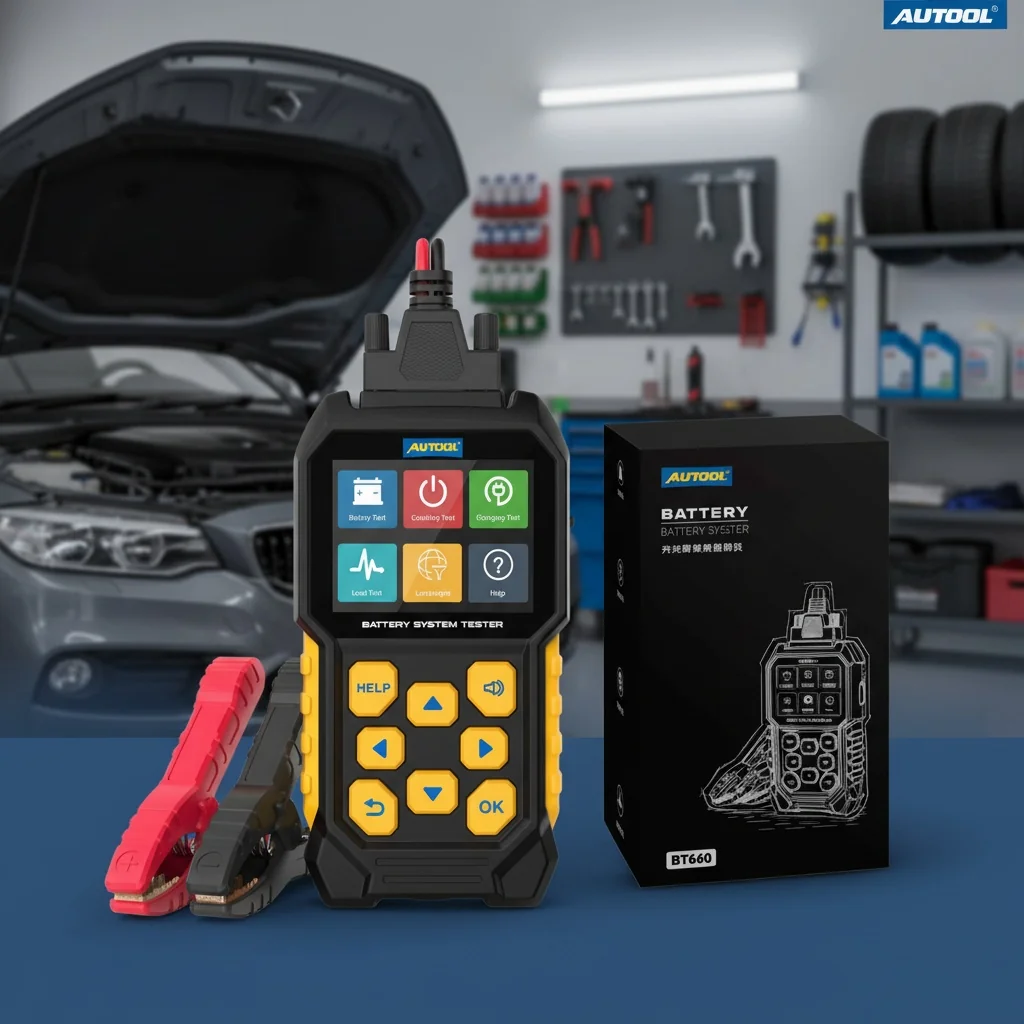
  • Buy your own tool: The AUTOOLUK BT460 Battery Tester at £58.99 pays for itself after a single use compared to garage fees. Free UK delivery included.
  • AutoZone-style free reads: Less common in the UK than the US, but some motor factors will plug in a reader if you ask nicely.

Honestly, I've found the "free diagnostic" offers from garages are often just a basic code pull. They'll read the code, then tell you it needs "further investigation" at £60/hour. Not always — some are genuinely helpful — but go in with your eyes open.

Money-saving fact: If you drive an older vehicle or manage multiple cars, owning a diagnostic test machine for cars at home eliminates recurring scan fees entirely. A decent OBD-II reader costs £30–£80. A professional-grade car diagnostic tool from autooluk.co.uk covers both fault codes and battery health testing.

DIY at Home vs Professional Garage: Full Comparison

DIY car diagnostic testing at home vs professional garage

This is the big question for most car owners: should you invest in your own equipment or keep paying per visit? The answer depends on how often you need scans and how comfortable you are interpreting fault codes.

Factor DIY at Home Professional Garage
Cost per scan £0 (after initial purchase) £35–£150 each time
Initial investment £58.99–£300 £0
Break-even point 1–3 scans N/A
Code depth Generic + some manufacturer codes Full manufacturer-specific access
Interpretation Self-research required Expert explanation included
Convenience Instant, any time Booking required, travel time
Battery/alternator testing With right tool (e.g., AUTOOLUK BT460) Usually included in full check
Software updates Not available Available at dealers

My take? For most people who own a car over 5 years old, buying your own kit is a no-brainer. You'll use it more than you think. That warning light at 7am on a work morning? Sorted in 5 minutes on your driveway instead of booking a garage slot three days out.

Where garages still win: complex intermittent faults, anything requiring oscilloscope work, and manufacturer-specific programming. If your car needs a software reflash or module coding, you need professional equipment worth thousands.

Battery and Alternator Testing: The Overlooked Essential

Testing a car battery and alternator with a diagnostic device

A flat or failing battery causes more breakdowns in the UK than any other single fault. The AA reported attending over 3.5 million breakdowns in 2025, with battery failure topping the list yet again. A car battery tester is arguably more useful day-to-day than a full OBD-II scanner.

Here's what most people don't realise: a battery can show 12.6V on a multimeter (which looks fine) but completely fail under load. That's why a proper car battery load tester matters — it applies a controlled load and measures how the battery responds, not just its resting voltage.

Car battery voltage chart — what the numbers mean

Voltage Reading State of Charge Action Needed
12.6V or above Fully charged (100%) None — healthy battery
12.4V ~75% charged Monitor, may need charging
12.2V ~50% charged Charge soon
12.0V ~25% charged Charge immediately
Below 11.9V Effectively flat Replace or deep-charge and retest

What should voltage on a car battery be while the engine's running? Between 13.7V and 14.7V. Anything below 13.5V suggests your alternator isn't charging properly. Above 15V and you've got an overcharging issue that'll cook the battery.

The AUTOOLUK alternator charging test tool checks both battery condition and alternator output in one go. At £58.99 with free UK delivery, it's the best car battery tester UK buyers can get at this price point — I've compared it against digital car battery testers costing twice as much and the accuracy is spot on.

Worth the extra spend on a dedicated automotive battery tester versus a basic multimeter? Absolutely. A multimeter gives you voltage. A proper battery tester gives you CCA (Cold Cranking Amps), internal resistance, and a health percentage. That's the difference between knowing your battery reads 12.4V and knowing it's actually at 60% health with degraded plates.

Choosing the Right Car Diagnostic Tool for Home Use

Choosing the best AUTOOL diagnostic tool for home use

The market's flooded with options — from £8 Bluetooth dongles on Amazon to £3,000+ professional systems. For most UK car owners doing their own maintenance, the sweet spot sits between £25 and £150.

What to look for in 2026

  • OBD-II compatibility: Must support CAN, ISO, and KWP protocols
  • Live data streaming: Real-time sensor readings, not just stored codes
  • Battery testing capability: Combined tools save money and space
  • UK vehicle coverage: Check it supports your specific make and model
  • Update frequency: Newer cars need updated software databases

I'd recommend starting with a dedicated car battery tester UK buyers can rely on — like the AUTOOLUK BT460 — alongside a basic OBD-II reader. Why both? Because battery and charging faults cause symptoms that mimic dozens of other problems. Random misfires, erratic idle, weird electrical gremlins — half the time it's just a dying battery dragging the voltage down. (Spent three hours chasing a phantom misfire code once before realising the battery was on its last legs. Never again.), meeting British quality expectations

Look, I know buying two tools sounds like overkill. But I've saved myself at least £200 in garage diagnostic fees over the past year alone. My mate who teaches in the tech department swears by having both on hand too — he's tested batteries for half the staff car park at this point.

For guidance on safe use of electrical testing equipment, the HSE's electrical safety guidance covers best practices. And if you want independent reviews of consumer car products, Which? car battery charger reviews offer useful comparisons — well, actually, they focus more on chargers than testers, but the buying principles overlap.

For a step-by-step walkthrough, see our guide on how to test a car battery at home in the UK.

Frequently Asked Questions

Frequently asked questions about car diagnostics
How long does a car diagnostic test take?

A basic OBD-II code read takes 5–10 minutes. A full multi-system diagnostic scan typically takes 20–45 minutes at a garage. At home with your own automatic car diagnostic tool, you can pull codes in under 5 minutes once connected to the 16-pin OBD-II port.

What voltage should a car battery be when fully charged?

A fully charged car battery should read 12.6V or above with the engine off. With the engine running, expect 13.7V to 14.7V — this confirms the alternator is charging correctly. Below 12.0V at rest means the battery needs immediate charging or replacement.

Can I do a car diagnostic test myself at home?

Yes. You need an OBD-II scanner (from £25 upwards) and your car's OBD port location — usually under the dashboard on the driver's side. Plug in, turn the ignition on, and the tool reads fault codes automatically. For battery health, a dedicated tester like the AUTOOLUK BT460 at £58.99 gives professional-grade CCA and voltage readings.

Is a car diagnostic test the same as an MOT?

No. An MOT is a legal roadworthiness inspection covering brakes, lights, emissions, and structure — costing up to £54.85 (the maximum fee set by DVSA). A diagnostic test reads electronic fault codes and sensor data. Since 2018, though, MOT testers do connect to the OBD-II port to check emissions-related fault codes on cars from 2006 onwards.

What's the best car battery tester for UK buyers in 2026?

For value and accuracy, the AUTOOLUK BT460 at £58.99 with free UK delivery is hard to beat. It tests 12V batteries from 100–2000 CCA, checks alternator charging output, and displays results on a clear digital screen. Professional garages use similar technology in tools costing £150+, making this excellent bang for your buck for home use.

Do Halfords do free car diagnostic tests?

Halfords offers free battery health checks in-store — they'll test voltage and CCA at no cost. For a full OBD-II diagnostic scan, Halfords Autocentres charge from around £49.99 (prices vary by location, June 2026). The free battery check is decent for ruling out charging system issues but won't read engine or transmission fault codes.

Key Takeaways

Key takeaways for car diagnostic testing in the UK
  • A car diagnostic test reads electronic fault codes from your vehicle's ECU and other modules — it identifies problems but doesn't fix them.
  • UK garage prices range from £35 to £150 per scan in 2026, with dealers charging the most and independent garages offering better value.
  • Free options exist — Halfords battery checks, some garages with repair commitments, and owning your own tool eliminates recurring fees entirely.
  • DIY tools pay for themselves after 1–3 uses — the AUTOOLUK BT460 costs £58.99 (less than a single garage scan) and includes free UK delivery.
  • Battery faults mimic other problems — always test car battery voltage and alternator output before chasing expensive fault codes. A healthy battery reads 12.6V+ at rest and 13.7–14.7V running.
  • Basic OBD-II readers suit most home users, but complex intermittent faults and module programming still require professional garage equipment.
  • Since 2018, MOT testers use OBD-II data for emissions checks — keeping your car's fault codes clear helps avoid MOT failures.

Ready to try AUTOOLUK?

Shop Now — £58.99